Wednesday, 21 September 2011

ford-market developments

Market developments
During the mid to late 1990s, Ford sold large numbers of vehicles, in a booming American economy with soaring stock market and low fuel prices. With the dawn of the new century, legacy healthcare costs, higher fuel prices, and a faltering economy led to falling market shares, declining sales, and sliding profit margins. Most of the corporate profits came from financing consumer automobile loans through Ford Motor Credit Company.
By 2005, corporate bond rating agencies had downgraded the bonds of both Ford and GM to junk status, citing high U.S. health care costs for an aging workforce, soaring gasoline prices, eroding market share, and dependence on declining SUV sales for revenues. Profit margins decreased on large vehicles due to increased "incentives" (in the form of rebates or low interest financing) to offset declining demand.
In the face of demand for higher fuel efficiency and falling sales of minivans, Ford moved to introduce a range of new vehicles, including "Crossover SUVs" built on unibody car platforms, rather than more body-on-frame chassis. In developing the hybrid electric powertrain technologies for the Ford Escape Hybrid SUV, Ford licensed similar Toyota hybrid technologies[ to avoid patent infringements. Ford announced that it will team up with electricity supply company Southern California Edison (SCE) to examine the future of plug-in hybrids in terms of how home and vehicle energy systems will work with the electrical grid. Under the multi-million-dollar, multi-year project, Ford will convert a demonstration fleet of Ford Escape Hybrids into plug-in hybrids, and SCE will evaluate how the vehicles might interact with the home and the utility's electrical grid. Some of the vehicles will be evaluated "in typical customer settings", according to Ford.
In December 2006, the company raised its borrowing capacity to about $25 billion, placing substantially all corporate assets as collateral to secure the line of credit.Chairman Bill Ford has stated that "bankruptcy is not an option". In order to control its skyrocketing labor costs (the most expensive in the world), the company and the United Auto Workers, representing approximately 46,000 hourly workers in North America, agreed to a historic contract settlement in November 2007 giving the company a substantial break in terms of its ongoing retiree health care costs and other economic issues. The agreement includes the establishment of a company-funded, independently run Voluntary Employee Beneficiary Association (VEBA) trust to shift the burden of retiree health care from the company's books, thereby improving its balance sheet. This arrangement took effect on January 1, 2010. As a sign of its currently strong cash position, Ford contributed its entire current liability (estimated at approximately US$5.5 Billion as of December 31, 2009) to the VEBA in cash, and also pre-paid US$500 Million of its future liabilities to the fund. The agreement also gives hourly workers the job security they were seeking by having the company commit to substantial investments in most of its factories.
ford
ford
ford
ford
ford
ford
ford
ford
ford
ford

Tuesday, 20 September 2011

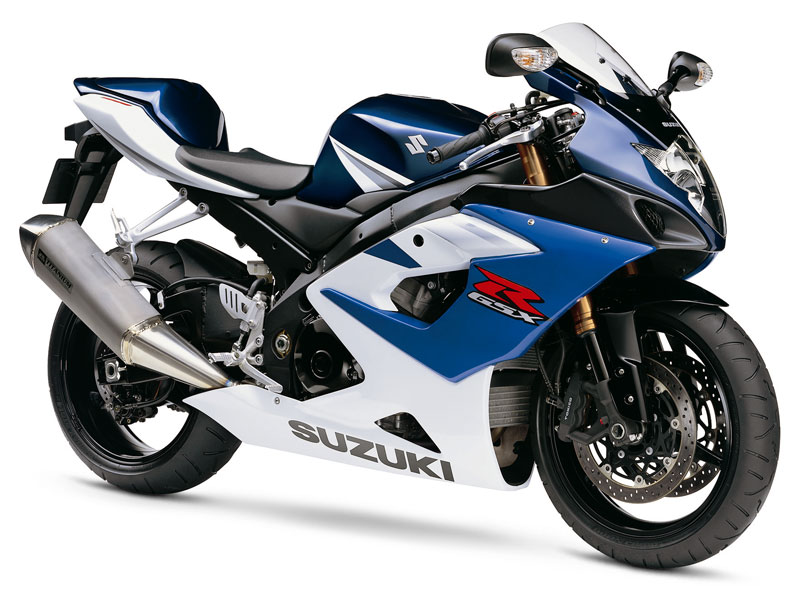
gsxr 1000 new top wallpaper

gsxr 1000
gsxr 1000
gsxr 1000
gsxr 1000
gsxr 1000
gsxr 1000
gsxr 1000
gsxr 1000
gsxr 1000

gsxr 1000

Monday, 19 September 2011

honda civic already out there receiving

While the European version of the 2012 Honda Civic has just arrived, the US incarnation of the car is already out there receiving tuning bits. To be more specific, Fox Marketing is working on a 2012 Civic Si project for this year’s SEMA.
This is all part of a bigger project, with Honda offering multiple Civics to the top US tuning companies for the aftermarket event. But let’s get back to what Fox Marketing is doing with the new import.
The works started in the engine bay, with an impressive amount of work, as Full Race was appointed to install a custom turbocharging kit which will bring the K24 engine to an output of around 550 hp. However, the power level is not the special thing here. You see, the two companies will work together to reach the aforementioned output without modifying the engine internals, in order to show just how much tuning potential the powerplant has.
Of course, gifting a car with so much extra power means that you must also make sure than it can handle it, as well as get rid of the speed generated by it, when this is necessary. Thus, the Fox Marketing 2012 Honda Civic Si will receive Yonaka SPEC II coilovers and SSBC 12-inch brakes.
As for the exterior modifications, the only thing we are certain of so far is that the vehicle will be dressed in Sinister Silver. We’re looking forward to meeting the car on November 1st, when this lands on the SEMA floor.
honda civic
honda civic
honda civic
honda civic
honda civic
honda civic
honda civic

Saturday, 17 September 2011

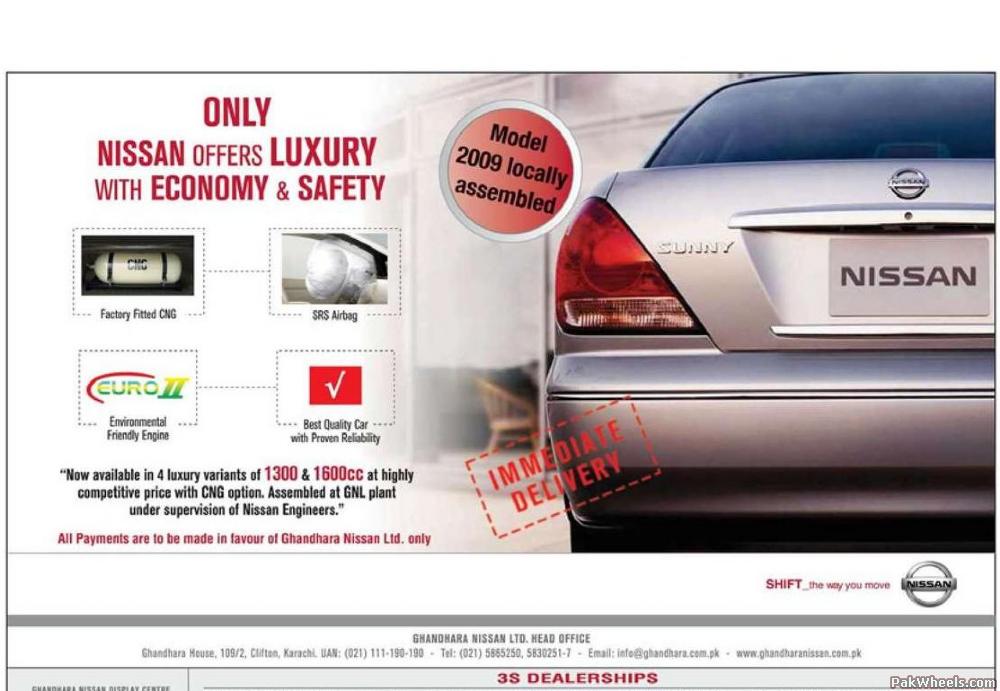
Nissan Best Engines for 14 straight years

Nissan Motor Company Ltd Nissan Jidōsha Kabushiki-gaisha?) (TYO: 7201), usually shortened to Nissan (play /ˈniːsɑːn/ or UK /ˈnɪsæn/; Japanese: , is a multinational automaker headquartered in Japan. It was formerly a core member of the Nissan Group, but has become more independent after its restructuring under Carlos Ghosn (CEO).
It formerly marketed vehicles under the "Datsun" brand name and is one of the largest car manufacturers in the world. As of 2011, the company's global headquarters is located in Nishi-ku, Yokohama. In 1999, Nissan entered a two way alliance with Renault S.A. of France, which owns 43.4% of Nissan while Nissan holds 15% of Renault shares, as of 2008. The current market share of Nissan, along with Honda and Toyota, in American auto sales represent the largest of the automotive firms based in Asia that have been increasingly encroaching on the historically dominant US-based "Big Three" consisting of GM, Ford and Chrysler. In its home market, Nissan became the second largest car manufacturer in 2011, surpassing Honda with Toyota still very much the dominant first. Along with its normal range of models, Nissan also produces a range of luxury models branded as Infiniti.
The Nissan VQ engines, of V6 configuration, have been featured among Ward's 10 Best Engines for 14 straight years.
Nissan
Nissan
Nissan
Nissan
Nissan
Nissan
Nissan
Nissan
Nissan
Nissan

Mazda-technology and explores what drives us

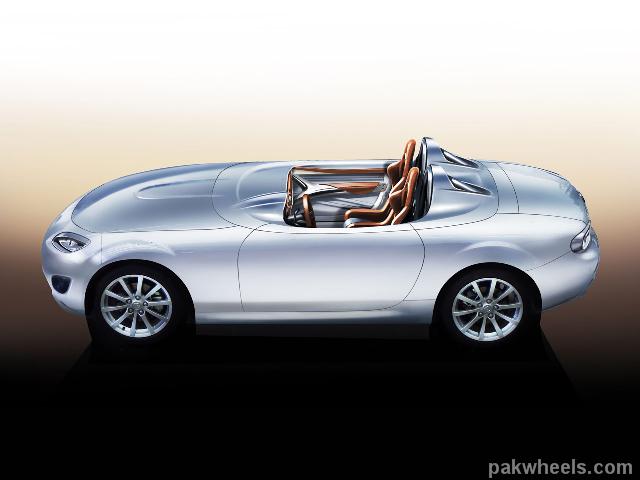
Mazda launches SkyActiv Technology and explores what drives us
This year has been much like a rollercoaster ride - not only for Mazda but for the automotive industry as a whole. From the lows of the devastating March earthquake and tsunami in Japan to the highs of the announcement of our allnew SkyActiv Technology, Mazda's been through quite a year.

We were fortunate to be far enough away from the quakehit area in Japan, therefore not experiencing any physical damages. Thankfully, our employees were safe but, unfortunately, families and relatives of our employees and also our dealers and suppliers in the affected areas suffered enormous damage.

Our production plants weren't directly affected, but we were forced to shut down production for a period of time due to lack of parts from our suppliers, whose plants were directly impacted.

Thanks to a tremendous amount of hard work and determination, production plants have returned to normal and we are back to full production capacity.

To put the overall industry losses into perspective, approximately 285,000 vehicles were lost each production work day that global light-vehicle production was not functional.

Despite extensive losses in the automotive industry, the Canadian automotive market witnessed a 2.7-per-cent growth over the first half of 2011 - an encour-aging statistic, to say the least. However, a slight loss of sales momentum among North American-sourced Japanese models demonstrated that the impact on supply reached far and wide.

Read more: http://www.montrealgazette.com/news/Mazda+launches+SkyActiv+Technology+explores+what+drives/5417740/story.html#ixzz1YHY4doeA

Mazda
Mazda
Mazda
Mazda
Mazda
Mazda
Mazda
Mazda
Mazda

Mazda

Saleen-limited-production, hand...

The Saleen S7 is a limited-production, hand-built, high-performance American supercar developed jointly by Steve Saleen for the initial concept and direction, Hidden Creek Industries for resources and initial funding, Phil Frank for the body and interior CAD design and development, and Ray Mallock Ltd. for the chassis engineering. It was the only car produced by Saleen not based on an existing chassis.[citation needed] The S7 debuted on August 19, 2000 at the Monterey Historic Races. From 2000 until 2004, the S7 featured a Ford 427 big block, naturally aspirated V8 engine with 550 horsepower (410 kW). In 2005, the S7 was replaced by the S7 Twin Turbo, which featured a more powerful twin-turbo system that boosted engine power to 750 horsepower (760 PS/559 kW) and the top speed 248 mph (399 km/h).
Saleen
Saleen
Saleen
Saleen
Saleen